Histories and South Asian Women in the West End
I knew very little about life outside of India when I left four years ago, and my first window to the rest of the world was Newcastle upon Tyne. I thought this was what the UK was like. I thought Northumberland Street was what all streets looked like. I thought Leazes’ Park was what all parks were like. And walking down Westgate Road, I smelt so many smells, some familiar, but most of them new; I heard so many languages, some familiar, but most of them new. And then by the beach one day, I met an elderly fisherman who’d lived all his life in Wallsend – he said that it wasn’t always like this, in fact, this babble of languages and smells and people was something new to him, just as it was new to me.
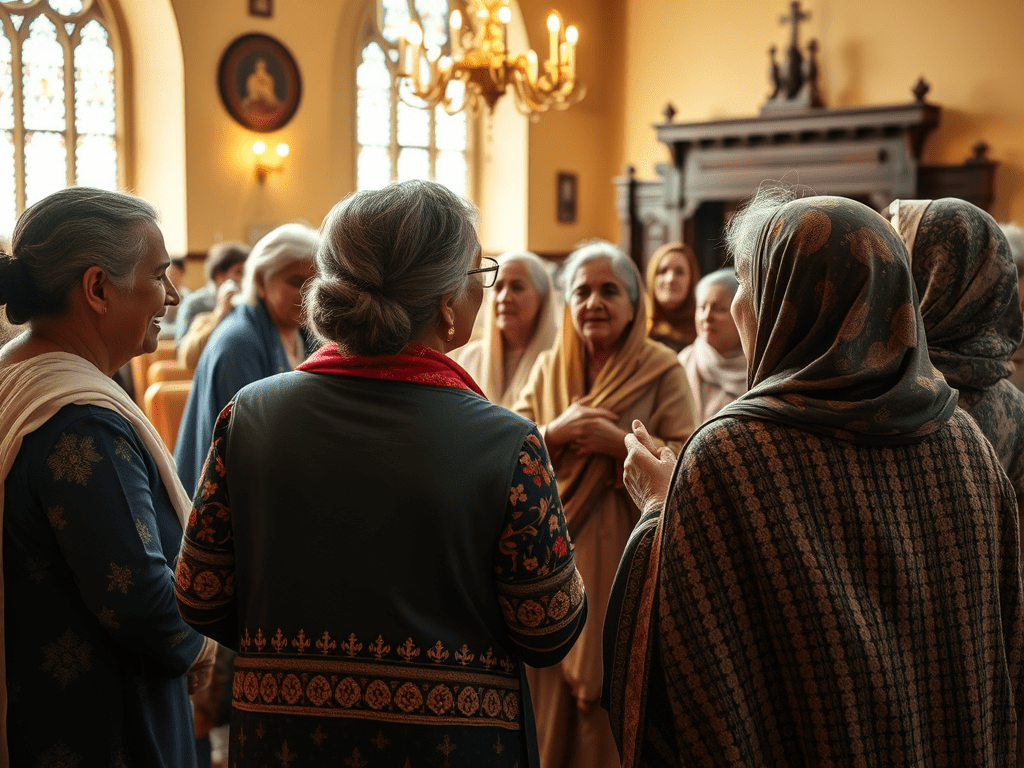
Since last summer, I have been working closely with a group of older Pakistani women in Newcastle, in an attempt to remember their stories and histories. I remember the first day we tried telling stories, we tried singing, writing, describing loosely, building a script. Some even suggested dancing to some Bollywood tracks. We heard stories of life in the west end in the sixties and seventies. You’d spend your day trying to think of new solutions to keep your home warm. There was only one fireplace.
How do we dry our laundry in this land of constant rain? The ground smelled of rain and the air was ice cold.
How many cigarettes were we expected to roll in the factories? How many cardigans could be knitted? How many skirts printed and sewn?
But nothing seemed to quite bring it together. When you do a project, write a book or maybe tell a story, you are always told to find a throughline. What is it that holds everything together?
And I thought I could hold it together with what I saw. I saw, how, for generations, the idea of the ‘South Asian woman’ was mute. When they spoke, they cried for help. Come rescue us.
I saw how women’s stories were pushed beyond the boundaries of what was thought to be real history – Women tell fictions, they said. They said women’s stories were less true.
I saw how telling a story almost always meant – Tell it in English, tell it in English or no one will hear you.
I saw how, to explain who was baaji, aunty-ji, didi, daadi we would have to translate it.
But didi in Bengali or baaji in Urdu does not mean older sister in English. It’s a form of its own network, something beyond bloodlines and kinship.
I saw how the story of these women who I met every Tuesday at twelve o’clock, in a church, in the West End of the city, was the story of leaving homes, leaving lands and borders.
…
When I was a child, they made sure that I knew about the border. It was built on a line of blood, they told me. There is barbed wire and arms clutching at the wooden poles. On the other side, they are… different.
Then, in the 2000s, I was still a little girl, but people from the other side of the border started to visit us. Fawad Khan, the Pakistani actor became every little girl’s crush – on our side of the border. Bollywood was making films about friendship between the two nations, Shah Rukh Khan, the biggest Bollywood actor was dancing to songs about this friendship. Singers and music were bringing us together, the music production house Coke Studio frequently brought musicians from both sides of the border to make some of the best songs in the 2000s and 2010s.
And then, I don’t know much about what happened in Pakistan, but, in 2014, Narendra Modi of the far-right BJP was installed as Prime Minister of India. Overnight, the mood changed, the friendship, at least what was perceived, was gone.
As I write this essay today, the two nations are at war again. On 22 April, twenty-five Indian people had travelled all the way to Kashmir, that land seeping in blood, but also in dreams. They say that when the Emperor of Hindustan, the Mughal Jahangir, lay his alcohol coated, tired eyes on Kashmir he screamed like a madman: Gar Firdaus, ruh-e-zameen ast, hamin asto, hamin asto, hamin ast [‘If there is heaven on earth, It is this! It is this! It is this!]. He had found paradise.
But on that summer morning in April, the twenty-five people travelling in Pahalgam in Kashmir, were killed. A little child of eleven was cornered by the Indian media, tell us, how was it? The boy’s father had just been murdered before his eyes.
Overnight, all Pakistani television channels were banned in India. The Pakistani heart-throb, my childhood crush Fawad Khan had made an Indian movie after five years that was due to release later this summer. But, now the RSS, a right-wing militant group of the BJP have called for boycott.
In India, if you utter the name Pakistan during a cricket match, you can be killed.
Kashmiri students in India are being persecuted, their scholarships cancelled and they are under constant threat of public lynchings and death.
In Haryana, Kashmiri shawl vendors who have covered the shivering bodies of Haryanvis for generations, have had to close shop and hide away.
But what is all this to me? I am sitting in a 17th century mansion in the middle of Northumberland county, sipping coffee and eating lemon drizzle cake, and sighing over what’s lost.
I can see only what I want to see, what I’ve wanted to see all this while.
Maybe it was never there. It was unreal in my desperate reality. It was empty for me to imagine, tabula rasa.
Maybe, when I was seven years old, I had already wished away the horror of the barbed wires at the Wagah Border.
……
Maybe instead, I should ask what if?
What if it was I who arrived, clutching my silk saree, wrapped around my head, at Central Station by the 3 o’clock from London? What if, before that train, I had travelled twelve hours from Lahore on a plane? And what if, before that plane, I had to pack my belongings and travel across the border from Aligarh in India?
Maybe it was the winter of 1969, and I got off the train at Central Station and stepped outside, and there was snow. Snow piled up on either side of the road, snow on windowsills and shop doors. I looked up at the sky, and – believe it or not, it was falling from the sky!
Maybe through time, I had the strength to clutch that snow between my palms and play with it, allow it to slip through my fingers, but only a little bit. I knew every street in the city, after all I’d spent twenty years working in almost every factory in Newcastle, until they closed them all down in the nineties. I knew all the people in this city, I knew how they met their wives and husbands, maybe I’d done a bit of matchmaking after I’d retired. And I knew all the neighbourhood gossip.
Slowly the memories of the hot, parched land that grows the best mangoes, a thousand miles away, left my body; and slowly this city crept up my veins and mixed with my blood. Just like a girl who will come to this city in 2019; my first glimpse at the world was a glimpse at the streets of Newcastle.
…
And then in the summer of 2024, when her and me walked hand in hand down Neville Street, conspiring to take the 3 o’clock train to the Metro-centre and do a bit of shopping, they came after us. They said we do not belong here. They said we must go back.
In Sunderland, they torched areas where people like us lived. Around the country, they marched because we lived here too. In Southport, they attacked the mosque. Elsewhere they attacked our homes, they attacked our shops. For a month I was afraid to step outside my house.
And as I looked back at these sixty odd years, I thought to myself: But what am I to do with my ears full of gossip from this city? What am I to do with my English that sounds Geordie? What am I to do with my addiction to Yorkshire tea?
What am I to do with the snow between my palms?
…
But later that summer, my people, my city marched down those very streets to protect us. It was a display of love, of solidarity and of friendships.
And that’s what it means to make a film about South Asian women living in the west end of Newcastle upon Tyne. They live through time, they live through places and they live through languages. They are Pakistani as they are Geordies. They celebrate Eid in a Church. They drink Yorkshire tea spiced with cardamon and cloves. They know the snows of the seventies like they know all the road names today. They whisper family recipes of daal to you as they speak of the fabric-shop they had for years. They tell stories of this city that nobody else will tell you.
Apni Aawaz – Our voice – is a glimpse into that story. It was made through several conversations, debates, tears, anger and laughter. It is a story about friendships, the friendships borne when you bring a cup of chai to another, the friendship that blooms when you exercise together, remember together, and tell stories together. But it is also the story of friendship between the women and the filmmaker, the filmmaker and the writer, the writer and the producer.
…
I performed a version of this essay at the opening of the film at John Marley Center in Newcastle upon Tyne in May 2025. The film Apni Aawaz was made through a partnership between New Writing North and Search Newcastle. I worked with a film-maker and a creative producer, I don’t have their permission to produce their names here so I am not doing so. Please feel free to contact me for more information.
 Malya b
Leave a comment