
Conversations about Open Research are dominated by technical jargon around copyright, licensing and different paths to publishing open access. If you do a quick search, you are bound to hear quite flat sounding terms like ‘institutional rights repository’, ‘diamond access’ or maybe the slightly more bombastic – ‘Transformative Agreements’. I started a new job as an ‘Open Research’ Officer in a university in the northeast of England at the end of last year. Needless to say, as a historian and one that dwells largely in the world of literature, I had almost never found myself at a position to learn any of those terms. Quite irresponsibly, I suppose, (and I was lucky to have funding), I published both of my articles fully Open Access, without understanding the logistics behind it.
As I wrote earlier, knowledge about Open Research seems to be immersed in factual statements about what the six types of Creative Commons Licenses are, for example, or the three routes to Open Access Publishing. Without denying the importance of learning the jargon, I want to talk about something else here.
Humanities and Open Research
Have the Humanities nothing to gain from Open Research? There are some things to understand about disciplinary disparities here. Whereas for STEM, journal articles are considered the primary modes of research dissemination, in the humanities, it is usually the book, or the monograph as it’s called. The production of a book (and costs associated with it) is far more complex than an article. Perhaps that has something to do with the lack of open research engagement in the humanities.
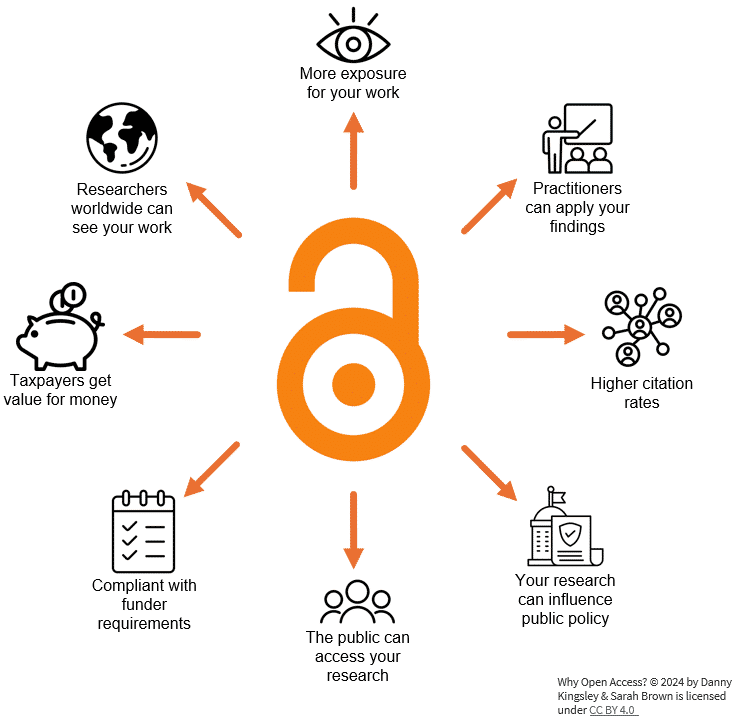
But, I remember, when I was preparing for my interview for my current job, I very quickly made connections between the work I was already doing in archival ethics, decolonisation and gender studies with Open Research. You see, open research is about making knowledge freely accessible so that anybody with an internet connection can access research being produced in any part of the world. Most importantly, it is about removing paywalls. But removing paywalls doesn’t really disappear the costs associated with publishing, rather, it transfers the costs from the reader to the writer. I’ll come to that a little later. For now I want to start by saying that of course, for academics working to understand structural inequalities to knowledge production and dissemination, the principles of open research become immediately relevant.
I want to argue that to understand the structural inequalities that underlie these processes, we need critical humanities. It is not until we introduce frameworks such as the ethics of knowledge production and dissemination, questions of who is producing and how that is being produced, access and inequalities, that the full extent of the implications of open research become evident.
Historically, from the late nineteenth century, scholarly articles were published by learned societies which were generally not for profit. Then came commercial publishing houses who published academic books and journals and that is part of the reason why open access publishing is not universal. Removing a paywall for an online article is fairly simple as there is no physical product that needs to be produced. But still, there are costs associated with online publishing – copy-editing, formatting, typesetting, etc. A paywall is only removed when somebody (or some institution like a research body) pays the publisher to make the work open.
Global South-North Disparities
Access to large funds is still largely limited to the global north. Academic libraries in the UK for example, provide access to immense amounts of resources – books, articles, databases, archives – as well as facilities as seemingly simple as a 24 x 7 library with internet access. Universities in the global south are still unable to meet these. Hence, even with the removal of paywalls and subscription based journals, the knowledge being produced is churned unevenly in the global north.
And because it is scholars and academics in the global north who gain access to the funds necessary to make their work open access, the narrative continues to be shaped by the knowledge produced by them. For context, the cost (Article Processing Fees) to make a journal article open access can range between £3,000 – £12,000.
Ethics
Another is the question of ethics – especially if one is working with sensitive or people-facing material. We must ask: how much should be made ‘open’?
I have previously worked with vast amounts of personal letters that have ended up in British surveillance archives. I struggled with coming to terms with making these letters ‘open’, especially when they are taken out of context as ‘evidence’ for a claim. Methods of anonymisation, redaction and even withdrawal are immensely important while working with such material – and they must be written into the principles of Open Research.
Academia is Extractive
I can’t stress this enough, but academics and the capitalist system of academia is MASSIVELY extractive. To give an example, a researcher may travel to the depths of Afghanistan to study the legacies of the Soviet world. They are likely to hire a translator (as most academics in the UK or North America mostly write and speak only in English) and conduct interviews with living people. The ‘open’ research that they produce is likely to be in English. Will this work ever reach the communities that the knowledge was extracted from?
Translation aside, frameworks of marginalisation and global inequalities are built off the knowledge gained from the most vulnerable in societies. Academic learn from communities, but there is very little they can offer back to them under the current systems. To truly make research open, an understanding of these processes is indispensable; humanities is indispensable.

